| Parameter | Details |
|---|
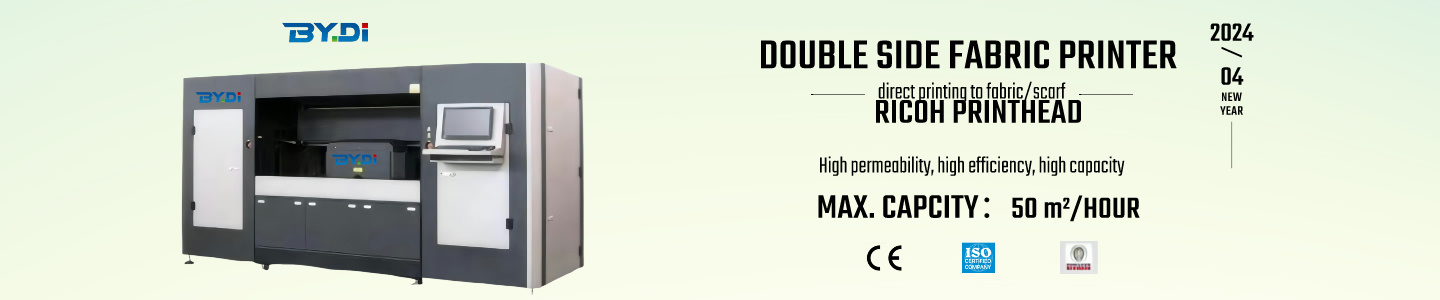
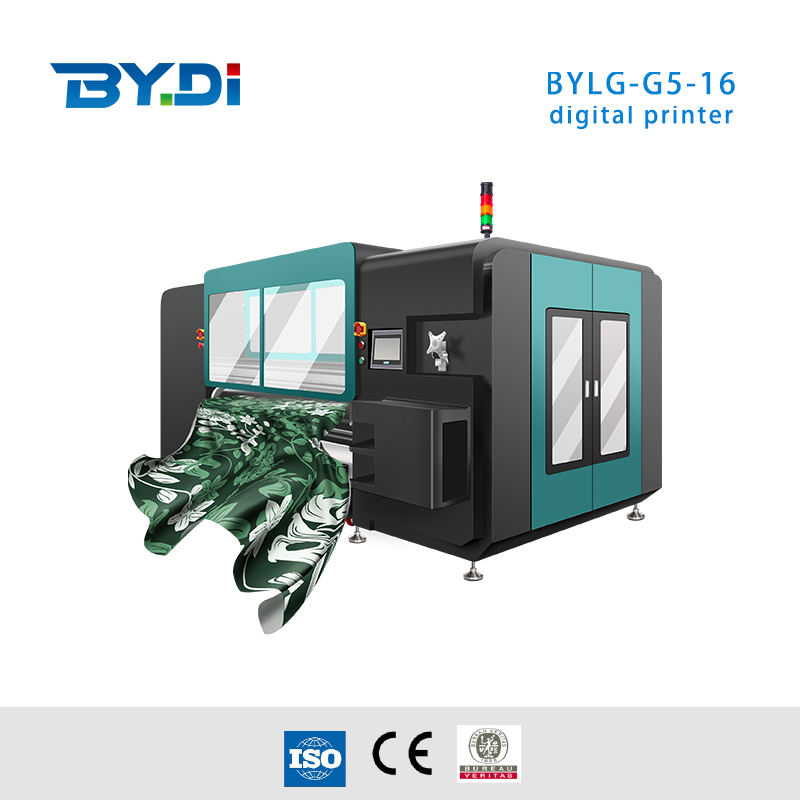
| Printing Width | 1600mm |
| Max Fabric Thickness | ≤3mm |
| Production Mode | 50㎡/h(2pass); 40㎡/h(3pass); 20㎡/h(4pass) |
| Image Type | JPEG/TIFF/BMP |
| Ink Colors | CMYK/CMYK LC LM Grey Red Orange Blue |
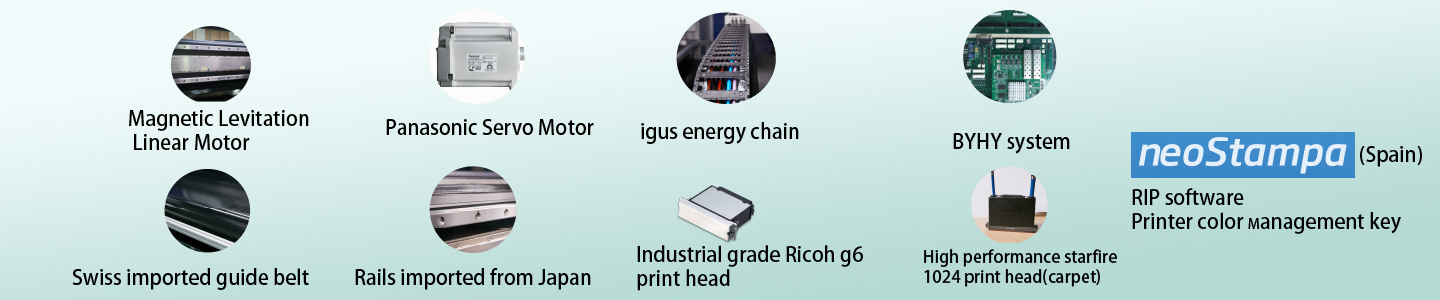
| RIP Software | Neostampa/Wasatch/Texprint |
| Power Supply | 380vac ±10%, three phase five wire |
Common Product Specifications
| Specification | Details |
|---|
| Printing Heads | 8 pcs Ricoh G6 front and back |
| Ink Types | Reactive/Disperse/Pigment/Acid/Reducing |
| Transfer Medium | Continuous conveyor belt, automatic winding |
| Power | ≤25KW, extra dryer 10KW(optional) |
| Compressed Air | ≥0.3m3/min, ≥6KG |
| Dimensions | 3800(L)×1738(W)×1977(H) MM |
Product Manufacturing Process
The manufacturing process of duplex digital printing machines utilizes advanced inkjet technology, involving precise engineering to ensure simultaneous front and back printing. According to studies in industrial printing technology, the machine integrates a synchronized dual-sided mechanism which enhances throughput and reduces production steps. This automation reduces human error and enhances printing quality. The use of Ricoh G6 heads ensures fine droplet formation and consistent printing, leveraging high-speed electronics for accurate ink placement. The integration of a robust conveyor system allows seamless fabric transition, ensuring alignment accuracy and minimizing waste. This method not only ensures high precision but also accommodates rapid demand changes, making it ideal for industries requiring flexible printing solutions.
Product Application Scenarios
Duplex digital printing machines have revolutionized textile manufacturing, offering comprehensive solutions for industries requiring high-volume, quality prints on various fabrics. Studies in digital textile applications report that such machines facilitate the production of synchronized double-sided prints, essential for creating reversible textiles used in home decor and apparel. In fashion, the ability to alter designs swiftly without extensive setup times provides designers with creative freedom and operational efficiency. The machine's capacity to handle multiple ink types supports diverse applications, from vibrant fashion textiles to durable home furnishings. Its adoption extends beyond traditional environments, proving valuable in rapidly evolving sectors like personalized and customized goods, where demand for unique, on-demand production is high.
Product After-Sales Service
Our factory provides comprehensive after-sales support for all digital printing machines. Services include troubleshooting, regular maintenance checks, and software updates to ensure peak operational performance. We have a dedicated support team available for technical consultations and on-site service if required. Our global network of agents and offices assures prompt response times, minimizing downtime and maximizing customer satisfaction.
Product Transportation
Our transportation services ensure safe and timely delivery of digital printing machines. Each machine is securely packaged to withstand transit, with shock absorption features in the packaging to prevent damage. We coordinate with top logistics companies to provide tracking services, ensuring transparency and reliability from dispatch to delivery.
Product Advantages
- High Efficiency: Simultaneous front and back printing reduces production time.
- Cost-Effective: Lowers material usage, decreasing per-unit cost and waste.
- Versatile: Supports multiple fabric types and ink varieties.
- Precision: Advanced Ricoh G6 heads deliver sharp, high-quality prints.
- Reliable: Built to international and industry standards for durability.
Product FAQ
- What types of ink can be used with this machine? Our machine supports reactive, disperse, pigment, acid, and reducing inks, suitable for various fabric printing needs.
- How do I maintain the machine? Regular checks and appropriate cleaning procedures are advised. Our support team can guide you through maintenance schedules and tasks.
- What is the production capacity? Depending on the mode, the machine can produce between 20㎡/h to 50㎡/h, accommodating various production demands.
- Is there a warranty? Yes, we offer a comprehensive warranty covering parts and labor, with extended options available for purchase.
- What is the power requirement? The machine operates at 380vac ±10%, with a power consumption of ≤25KW.
- Can the machine handle thicker fabrics? Yes, it can print on fabrics up to 3mm thick.
- What file formats are supported? The machine supports JPEG, TIFF, and BMP file formats, in RGB or CMYK color modes.
- How is the color accuracy? The use of advanced print heads ensures excellent color precision and consistency.
- What training is provided? We offer comprehensive training programs for operators and technicians to maximize the machine's efficiency.
- Are there any environmental considerations? Our machines are designed to minimize waste and energy usage, supporting sustainable practices.
Product Hot Topics
- The Future of Textile Printing As technology evolves, factory digital printing machines that print front and back at the same time are set to redefine production lines. With increasing demand for fast, reliable, and sustainable practices, these machines provide an all-in-one solution. They are at the forefront of meeting the textile industry's shift towards customization and personalization, proving indispensable for future growth.
- Achieving Sustainability Goals The integration of factory digital printing machines that print front and back at the same time significantly reduces resource consumption and waste. Their efficient use of inks and precision in material handling aligns well with corporate sustainability goals, proving advantageous for businesses seeking eco-friendly solutions.
- Empowering Personalized Fashion The ability for factory digital printing machines to print front and back simultaneously opens up unique opportunities in fashion personalization. This dynamic method allows for rapid prototyping and production, meeting the ever-changing consumer demands for unique, personalized designs and quick turnaround times.
- Industrial Applications Beyond Textiles Factory digital printing machines are versatile, expanding beyond textiles into sectors like packaging and signage. Their efficiency in handling dual-sided prints offers businesses a competitive edge, allowing them to diversify offerings without incurring high costs.
- Enhancing Creative Freedom Designers and creatives are finding new ways to express their creativity with factory digital printing machines. The technology eliminates traditional constraints, allowing for intricate designs and innovative concepts to come to fruition with ease and precision.
- Investment Worthy Technology Investing in factory digital printing machines that print front and back at the same time proves beneficial for businesses. These machines enhance production capabilities, reduce costs, and offer a swift return on investment due to their operational efficiencies and market adaptability.
- Technological Innovation in Printing The advent of factory digital printing machines marks a significant technological advancement in the printing industry. Their ability to print on both sides simultaneously reflects the ongoing innovation and commitment to enhancing productivity and quality.
- Adoption in Emerging Markets Emerging markets are quickly adopting factory digital printing machines due to their affordability and efficiency. The transition supports local industries in scaling production and meeting international standards, fostering economic growth.
- Customization Meets Mass Production The challenge of blending customization with mass production is addressed by factory digital printing machines that print front and back at the same time. They bridge the gap, offering bespoke solutions at scale, catering to diverse market demands.
- Operational Excellence in Textile Manufacturing Factory digital printing machines are crucial in achieving operational excellence. By streamlining workflows and enhancing precision, they ensure quality consistency and optimize resource utilization, benefiting manufacturers in a competitive landscape.
Image Description